Case IH SB531 Small Square Baler Service Pdf Manual
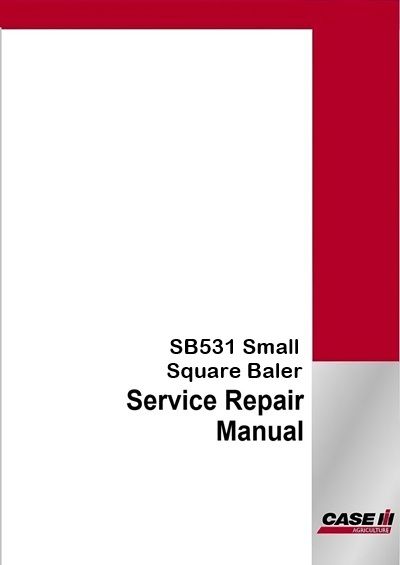
Case IH SB531 Small Square Baler Service PDF Manual
Built for farms that produce thousands of small square bales each season without requiring the capacity of larger commercial balers, the Case IH SB531 Small Square Baler combines a dependable rotary feeding system, compact driveline, and precision twine knotter to deliver consistent bale formation across a wide variety of forage crops. Designed for hay producers, horse farms, livestock operations, and mixed agricultural businesses, the SB531 efficiently handles hay, straw, and dry forage while maintaining uniform bale dimensions and dependable tying performance. This OEM factory workshop manual provides the detailed repair procedures required to keep every major mechanical system operating at peak efficiency.
Every adjustment inside a square baler influences the next stage of the baling cycle. A slight change in feeder timing can affect plunger loading, while improper needle synchronization may create intermittent knotter failures. Rather than simply describing component replacement, this service manual teaches technicians how to restore the complete operating sequence exactly as specified by Case IH engineers through systematic diagnosis, measurement, timing verification, and final operational testing.
Purpose-Built for Reliable Daily Baling
The SB531 uses a high-throughput rotary feeder equipped with a packer fork featuring two paired rotating fingers, allowing crop to move smoothly into the bale chamber with minimal plugging. A 65-inch pickup gathers windrows efficiently while the gear-driven knotter system consistently secures each bale. Hydraulic bale density adjustment helps maintain uniform bale weight despite changing crop moisture or varying windrow conditions.
OEM Workshop Repair Coverage
- Rotary feeder synchronization using factory timing references
- Twine knotter rebuilding including billhooks, twine discs and knife arms
- Hydraulic bale density adjustment and chamber pressure calibration
- Plunger guide inspection, bearing replacement and knife clearance settings
- Pickup reel servicing, tine bar replacement and gauge wheel adjustment
- Main gearbox inspection, lubrication and gear train servicing
- Needle carrier timing and safety latch adjustment
- PTO driveline servicing including shear bolt protection diagnosis
- Bale chamber wear inspection and chamber rail alignment
- Electrical troubleshooting with OEM wiring diagrams
- Wheel, axle and chassis maintenance procedures
Created for Efficient Workshop Diagnostics
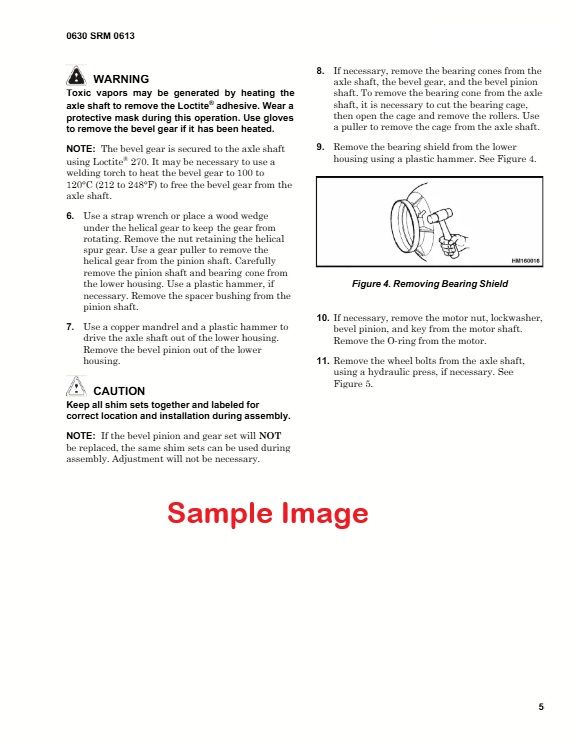
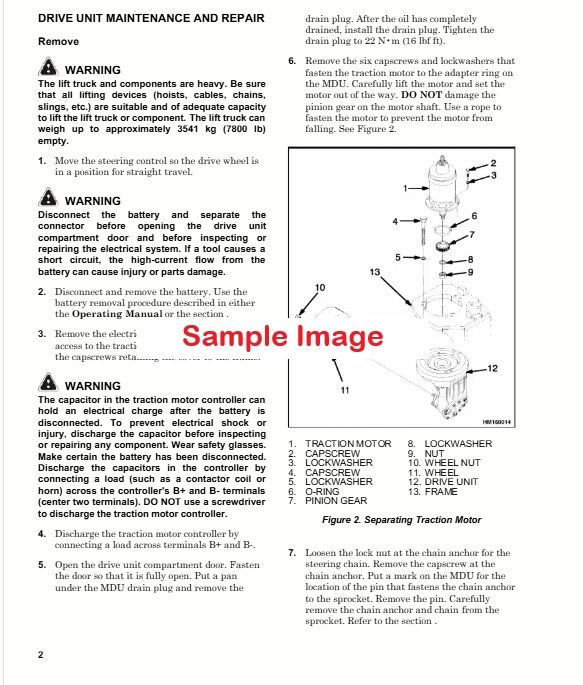
Instead of replacing expensive assemblies based on symptoms alone, this manual explains how to evaluate crop feeding consistency, plunger movement, knotter synchronization, driveline loading, and hydraulic bale tension individually. Factory inspection limits, adjustment values, exploded diagrams, and troubleshooting charts help technicians locate the true source of problems before repairs begin, reducing downtime during the busiest harvest periods.
| Manual Specifications | Details |
|---|---|
| Model Covered | Case IH SB531 Small Square Baler |
| Machine Category | Small Square Baler |
| Bale Size | 14 × 18 in. (356 × 457 mm) |
| Pickup Width | 65 in. (1651 mm) |
| Feeding System | Rotary Feeder with Two Paired Rotating Fingers |
| Plunger Speed | 93 Strokes Per Minute |
| Minimum PTO Requirement | 62 HP |
| Twine Capacity | 6 Balls |
| Main Driveline | ASABE Category VI Heavy-Duty PTO Driveline |
| Manual Type | OEM Factory Service Workshop Manual |
| Document Format | |
| Language | English |
| Delivery | Instant Digital Download |
| Workshop Coverage | Pickup Assembly, Rotary Feeder, Packer Fork, Plunger, Bale Chamber, Hydraulic Density Control, Knotter System, Needle Assembly, Gearbox, PTO Driveline, Chassis, Electrical System, Wiring Diagrams, Technical Specifications and Complete Workshop Repair Procedures |
Frequently Asked Questions
The feeder forks occasionally leave a thin layer of hay behind before each plunger stroke. Does this manual explain how to synchronize the rotary feeder correctly?
Yes. The manual provides factory timing marks, feeder indexing procedures, packer fork adjustment methods, and synchronization checks that ensure every crop charge enters the bale chamber at precisely the correct point in the plunger cycle.
Our SB531 ties cleanly in grass hay but begins leaving loose knots when baling dry wheat straw. Can this manual isolate the cause?
Absolutely. Dedicated knotter chapters explain how to inspect billhook wear, twine disc pressure, knife arm position, wiper clearance, needle alignment, and twine tension individually, making it possible to diagnose crop-specific knotting problems without replacing the complete tying assembly.
After installing new plunger bearings, the baler sounds smooth at idle but develops vibration at operating PTO speed. Does the manual explain why?
Yes. Factory procedures cover plunger guide adjustment, crank arm inspection, flywheel alignment, bearing preload, connecting linkage inspection, and knife clearance measurements that help identify the exact source of high-speed vibration.
Can this manual help restore consistent bale weight after replacing the bale chamber tension components?
Yes. Hydraulic and chamber adjustment sections explain bale density calibration, chamber resistance settings, tension rail inspection, and pressure verification so the SB531 can produce consistent bale weight across changing field conditions.
Why is this OEM workshop manual more valuable than a generic baler repair guide?
Because it documents the complete operating relationship between the pickup, rotary feeder, packer fork, plunger, hydraulic density system, and knotter drive using factory specifications developed specifically for the Case IH SB531. This allows technicians to restore original machine timing and performance instead of relying on trial-and-error adjustments.